And the thing almost everyone gets wrong about that phrase is this. They are not the one struggling with it. You are.
Why an emotionally unavailable partner costs you everything and them nothing Watch this part · 0:33
Consider what they have. Someone who attends to them closely, asks them for little, and forgives them fast. Someone who admires them from a distance that never requires them to be known. They collect the warmth of a relationship and pay none of its costs.
And they are not lying when they say they aren’t ready. They believe it. Nothing in their life is making readiness necessary. Why would it? The relationship already works, for them.
It is not a wall, and that is why it does so much damage Watch this part · 1:02
A wall you could see. You could climb it or walk away from it. This does its damage because it never arrives as rejection. It arrives as a remark about your size. You are intense. You are a lot. You overthink everything.
Nothing is ever denied. You are simply informed, gently, that the problem is the amount of you. And here is the part most of us keep from ourselves: somewhere in the last few months, we began to agree with them.
It works on you in two ways. First, it turns you into a translator. You develop a strange, useless skill: extracting meaning from almost nothing. Four words at eleven at night become evidence. A cancelled Saturday becomes proof that they are under pressure, not that they cancelled. You read their tone the way other people read the weather. And you get better at it.
The cruel part is this. The better you get at finding warmth in very little, the less they need to produce. Your skill pays their bill.
Second, it teaches you to shrink a request before you make it. Not because they forbade anything. They never did, which is what makes it impossible to point at. You learn, over many quiet months, which sizes get answered and which get silence. So you make the request smaller, then smaller again, until you arrive at something so modest it cannot be refused. A reply before midnight. One hour on a Sunday. And when it isn’t refused, you call that peace.
Why the relationship survives, and why leaving feels impossible Watch this part · 2:45
Here is what nobody says out loud: it works. The relationship survives. It survives because you made yourself small enough to fit inside what they were able to give. Which is exactly why leaving is so hard.
Leaving is not admitting that they failed you. That would be easy, and you would have done it a year ago. Leaving means admitting that the shape you have been holding for two years was built by your own hands, and that you were very, very good at building it.
This can continue for years. It rarely ends in a fight. A fight needs two people who both want something. It ends by accident. Someone else answers you in four minutes, and your body does something strange. It flinches. That is the moment you find out what you have been living on.
Some of us get that accident at twenty-six. Some at fifty-four. Some never get it at all. From the outside it looks like patience. From the inside it is an audition that never closes. And look at what it has been measuring: not whether you are too much, but how little you can be given before you stop asking. You have been passing that test for two years. Passing it is the problem.
They are not too damaged to love you. They are comfortable. And you agreed to carry the discomfort for both of you. That is the whole arrangement.
What you can do, without deciding anything yet Watch this part · 4:18
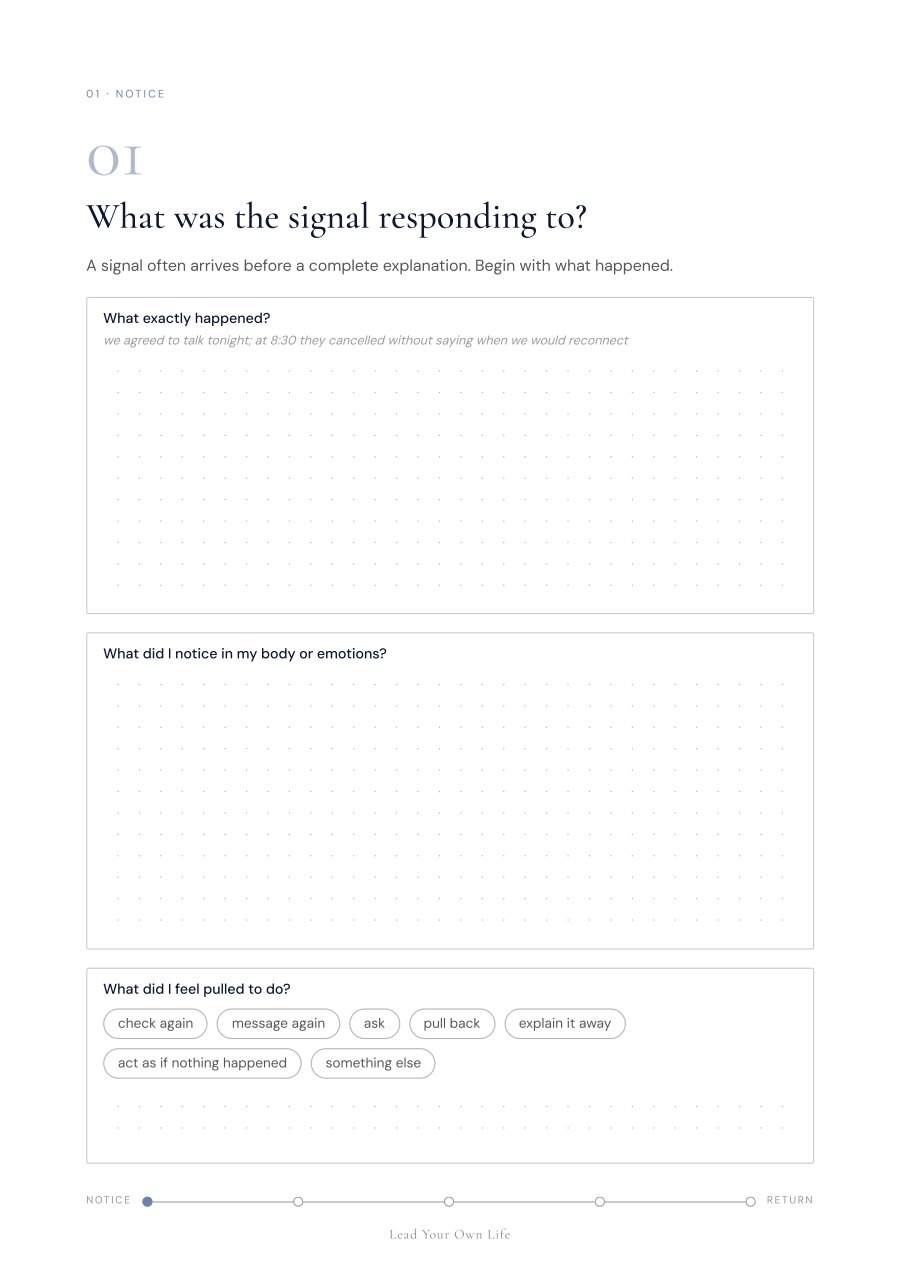
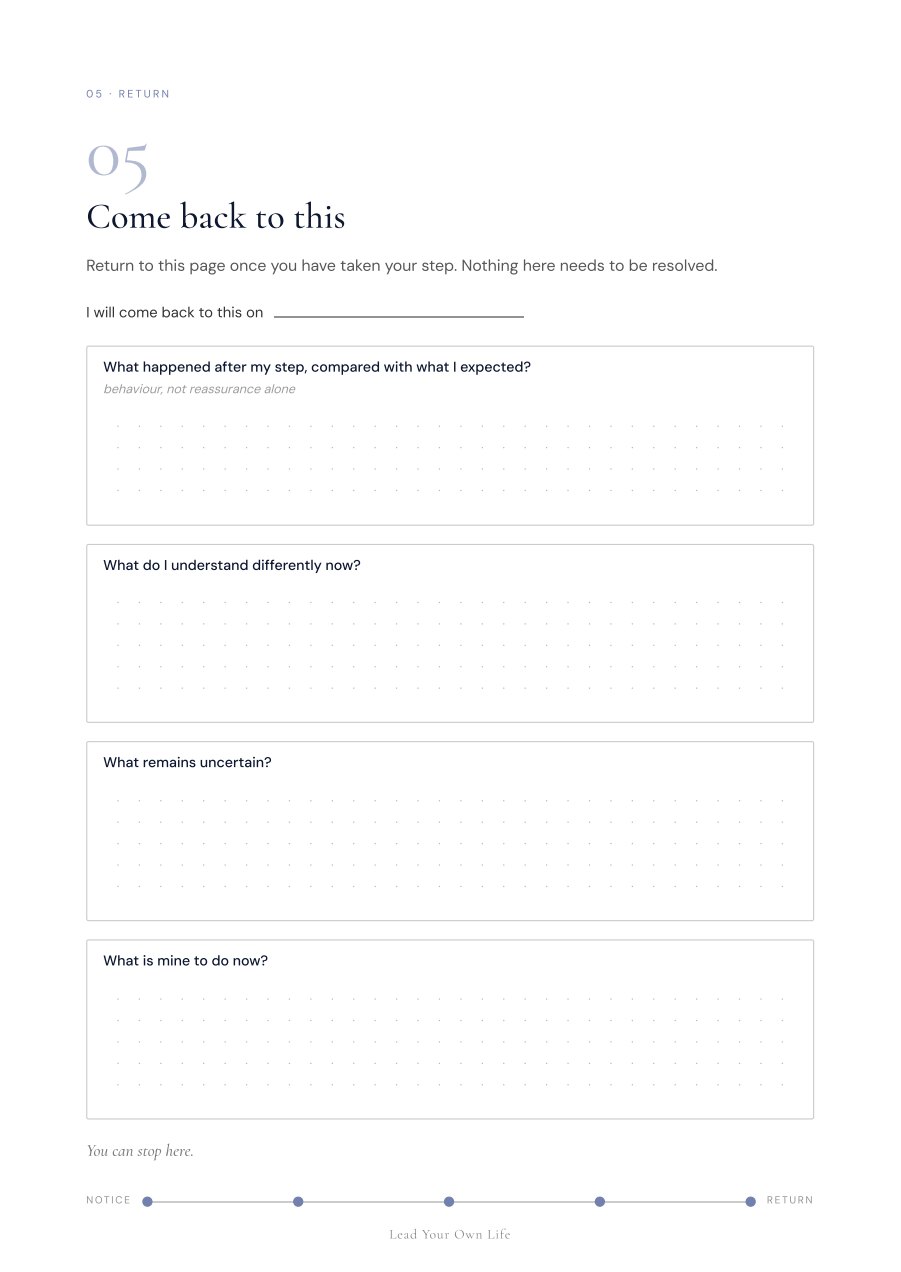
Four small things you can do without deciding anything, and the one sentence that measures the gap: that part is in the video, from 4:18. The free guide Notice Your Inner Signal walks one of these moments through five steps on paper.