Then something changes. A slower reply, less warmth, a different tone. Suddenly yesterday’s reassurance is no longer enough, so you ask again. But you have not forgotten their answer. You have lost what it gave you.
Reassurance itself is not the problem. But when someone else’s attention becomes the evidence you use to measure your worth, every change in them can reopen the doubt. The video traces that shift, from “Are we okay?” to “Am I still enough?”, and what it does to the way you see yourself.
Not every fear starts with you. If someone keeps saying everything is fine while repeatedly disappearing, withdrawing or breaking promises, the uncertainty is real. Their words and their behaviour point in different directions, and reassurance cannot make up for that inconsistency. Another answer can calm the moment without changing what keeps happening.
But what if they have generally been consistent? They show up. They communicate. They have already reassured you. And still, one strange reply can suddenly feel more convincing than months of consistency. The rest of the video explores that second situation, where the doubt keeps returning even though their behaviour has been steady.
Why do I keep asking for reassurance?
This is where anxious attachment comes in. When you are highly sensitive to changes in closeness, distance does not feel neutral, and fear of abandonment can make even a small shift feel threatening. A slower reply becomes “something changed”, and “something changed” quickly becomes “I might be losing them”.
So you seek reassurance. They give it, and the anxiety drops. And your mind learns something from that moment: “When I feel unsafe, their answer makes the feeling stop.”
It can look as if reassurance does not work. The video says the opposite: it works, and that is what makes it so compelling. The relief is real while it lasts, and it teaches you where to go the next time fear returns.
At first, the question is about the relationship: “Are we okay?” But slowly, their answer begins to do something else. Their warmth does more than tell you they are close. It makes you feel wanted. Their attention does more than tell you they care. It makes you feel important.
That is the shift. You think you are still asking “Do you love me?” Underneath, it can become “Am I still enough for you to love?” Your words stay the same, but what you need the answer to mean has changed.
Now reassurance is doing two jobs. It is telling you something about them, and it is starting to tell you something about yourself. That second job makes the cycle much harder to escape. You are no longer simply asking how they feel. You are asking their answer to tell you whether you are enough.
Why does my self-worth depend on their attention? Watch this part · 2:04
If their attention becomes evidence that you matter, less attention starts to feel like evidence that you matter less. If their affection becomes evidence that you are enough, distance raises the possibility that you are not. The same shift is at work in wanting to be chosen, with their choice in place of their attention.
This is the real trap. You are not only borrowing reassurance. You are borrowing self-worth, and borrowed self-worth has to be borrowed again. That is why yesterday’s “I love you” can lose its power when today feels different. Their distance did not change your value. It changed the evidence you were using to measure it.
So you need fresh evidence: another conversation, another confirmation, another “of course I still want you”. For a while, you feel better again. Reassurance can never finish this job, because it has been asked to carry something it was never meant to carry: your value.
Why do I shrink myself to keep their approval? Watch this part · 2:52
Here the pattern moves beyond what you feel and into what you do. Once their response has turned into your proof, you try to control the proof.
So you become easier to be with. You ask for less and give more. You wait longer and forgive faster. You try to be more attractive, more understanding, more useful, harder to leave. You think you are protecting the relationship, but underneath, you may be trying to get the reassuring version of them back: the one whose attention tells you that you matter, and whose affection tells you that you are enough.
That is how the focus quietly moves from you to them. You start using their eyes to see yourself, and once that happens, every change in them can become a change in you. A slower reply is no longer only about them. It starts to say something about you.
Yes. The video is clear that the way out of this cycle is not to become someone who never needs reassurance. Healthy relationships need it. We all need comfort, clarity and consistency, and people whose words and actions make sense together.
What the video looks at is something narrower: the point where you need the same confirmation again. Before you go back to them, it asks a single question: “What am I asking their answer to prove about me?”
If they say “Yes, I love you”, what are you hoping that means? That you matter? That you are enough? That you are lovable, that you cannot be replaced, that you are worth staying for? Those are much bigger questions than “Are we okay?”, and each one is about you rather than the relationship.
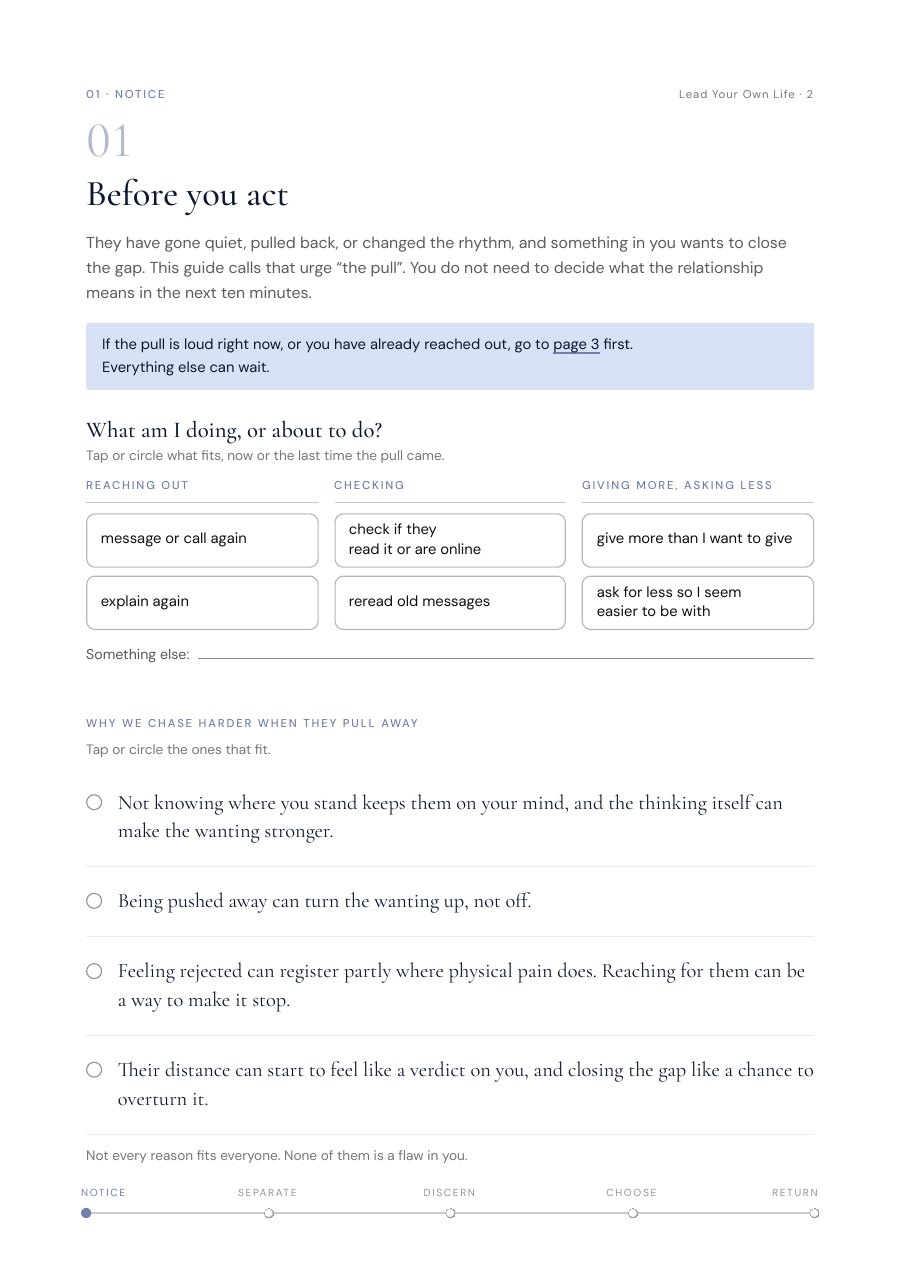
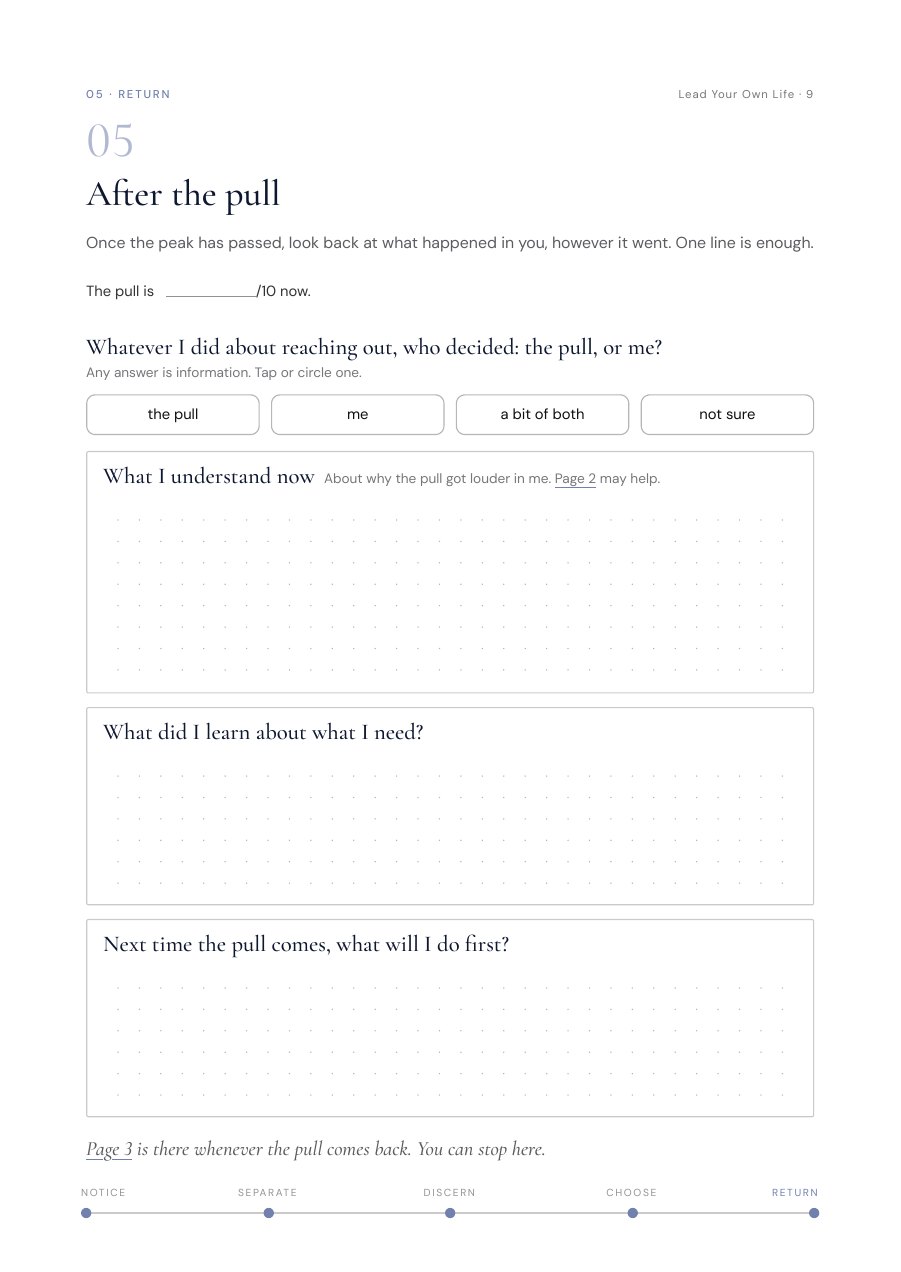
The free guide Before You Chase is made for the moment when the urge to ask again rises. On a phone or on paper, it makes a similar move: setting aside what is not in your hands, such as what they will answer, and coming back to what is yours.
Can their reassurance tell me what I am worth? Watch this part · 4:10
The video ends by bringing the attention back to you. It suggests letting reassurance do the job it was meant to do: to comfort you, to clarify the relationship, to tell you something about them. Telling you who you are was never part of it.
Their reassurance can tell you whether they love you. It cannot decide whether you are worthy of love. That is not their answer to give.
What this draws on