You tell yourself you are fighting for the relationship, and part of that is true. But the effort is no longer organised around the connection between two people. It is organised around their approval, and how to get it back. When someone’s distance makes you work harder to be chosen, you are not only reaching for closeness any more. You are waiting on a decision: choose me, so I do not have to feel rejected.
That is the part that is almost impossible to see from the inside, because every step of it looks like love. More patience. More understanding. More effort. None of it feels like self-abandonment while it is happening.
Their withdrawal can show one thing, and it shows it clearly: how they respond to closeness, to discomfort, to responsibility. What it cannot do is settle the question you have quietly handed it, which is whether you are worth staying for. While you are inside it, those two feel like the same question. They are not, and telling them apart changes what their distance is allowed to decide.
Why does their distance feel like a verdict on me? Watch this part · 0:29
When their warmth changes, the distance does not only hurt. It appears to say something about you. Was I too much? Was I not easy enough to love?
Instead of examining what changed in their behaviour, you put yourself on trial. You review conversations. You search for the moment you became less desirable. You rewrite messages that were already clear. You begin adjusting yourself around a withdrawal they have never explained.
An unexplained withdrawal leaves an empty space, and attention fills it with whatever is closest to hand, which is you. You were present for all of it. You can examine your own behaviour endlessly. Theirs, you can only guess at. So the examination turns inward, not because you are the cause, but because you are the only part of this you have any access to.
Why do I chase someone who keeps pulling away?
Once their distance feels like a verdict, pursuit becomes an appeal. Every extra effort carries the same hope underneath it: if I can make them return, I can prove I was worth staying for.
So you give more. You wait longer. You tolerate what would once have concerned you. Not because each effort is building a healthier connection, but because stopping would leave the verdict standing.
This is why letting go feels so much larger than the person. It does not feel like losing them. It feels like accepting what their rejection appears to say about you. And the person who created the doubt has become the person you are asking to remove it.
Why does it feel so good when they come back?
The relief is real. You feel wanted again. The questions go quiet. For a moment, you are not the person who was left.
But their return answers one question only: whether they are here right now. It does not show that they can communicate consistently, stay emotionally present, or build something you do not have to fight for your place inside. Presence can end the pain of an evening without making anything secure.
Which is why the relief never lasts as long as you expect it to. Nothing was resolved. It was postponed. And when their attention disappears again, the same questions come back, the same replaying, the same searching, the same hope for a different answer.
Why did I stop asking whether this relationship is good for me? Watch this part · 2:25
At the beginning, your questions pointed outward. Do I feel respected here? Is the effort mutual? Can I trust what they say? Those are questions about a relationship, and watching a relationship answers them.
Once losing them becomes frightening, the questions turn around. How can I be more patient? How can I need less? How can I become easier for them to choose? They sound like maturity. They are a change of subject.
The subject of the examination moved, and nothing announced it. You stopped evaluating the relationship and started evaluating yourself. That is where the chase costs more than it appears to, and the cost is not that you care too much. It is that the fear of being rejected has taken the place of your own judgement. You are still thinking hard. You are still paying very close attention. All of it is now aimed at one target, and it is not the relationship.
Why do I keep giving up parts of myself to keep them?
This is the part that is hardest to say out loud. When not being chosen feels unbearable, losing pieces of yourself can begin to feel like the smaller price.
You do not shrink because you want to disappear. You do it because, in that moment, disappearing hurts less than being the person they left. And because all of your attention is on preventing them from going, you stop noticing what staying is asking you to hand over. Your needs are not argued away. They simply stop being mentioned.
Does this mean I am weak for staying?
No. When rejection touches an older fear, the fear that you are not enough, chasing can feel like self-protection rather than loss. That fear may have existed long before this person, or repeated inconsistency may have sharpened it. You do not need to trace where it began to see what it is doing now.
A pattern can be entirely understandable and still be asking you to abandon yourself. Understanding why you chase is not the same as agreeing to keep chasing.
Before the next message, the next excuse, the next part of yourself offered up, there is a place to stop. The video sets out three questions for that moment. They are not a test of the other person and not a decision to leave. They do one narrow thing, which is to separate what their distance can actually show from what you are asking it to decide about you.
That separation matters because of what happens when it collapses. If you need their return to prove that you are lovable, the relationship is carrying a responsibility it can never discharge. No one can build your sense of worth by repeatedly making you doubt it and then briefly reassuring you.
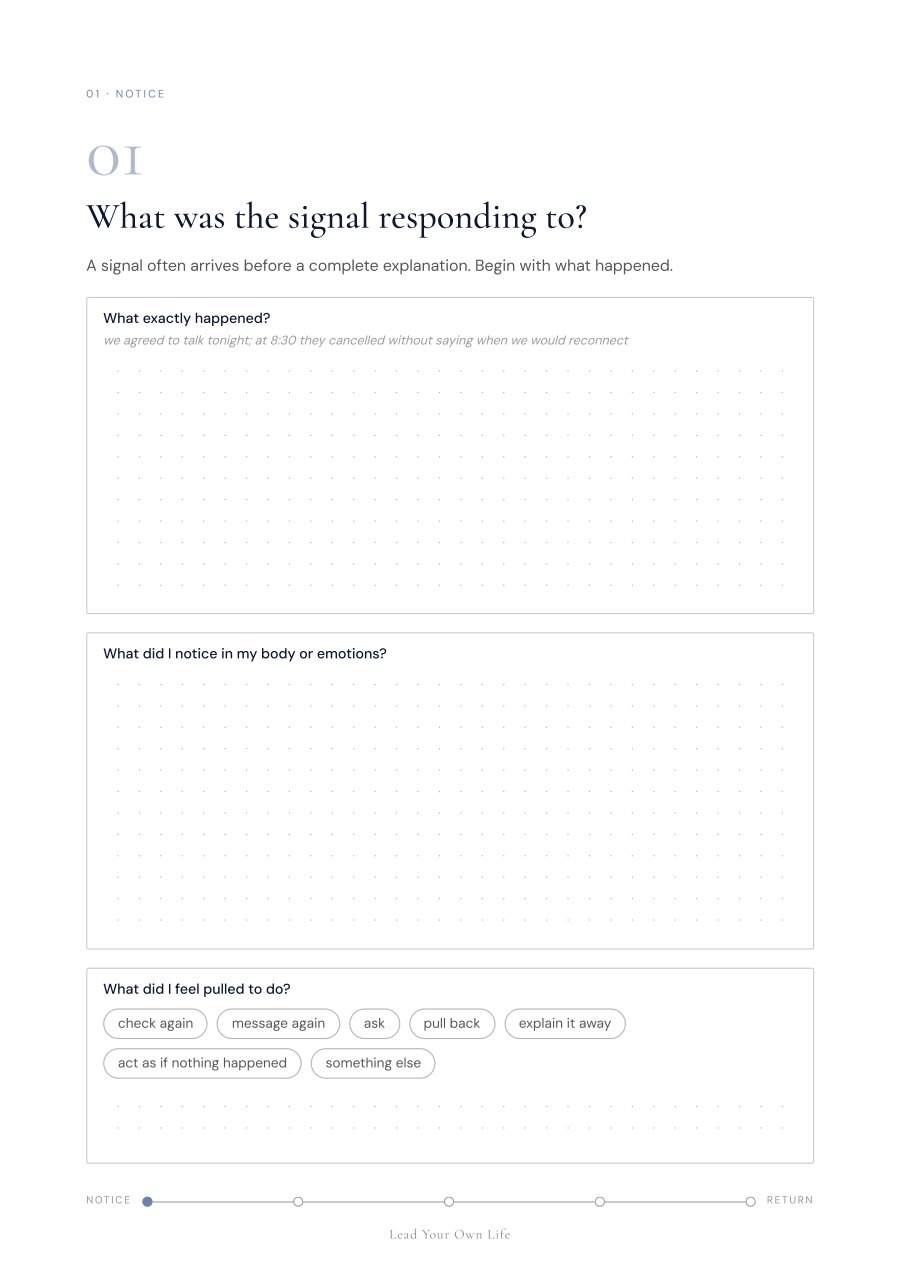
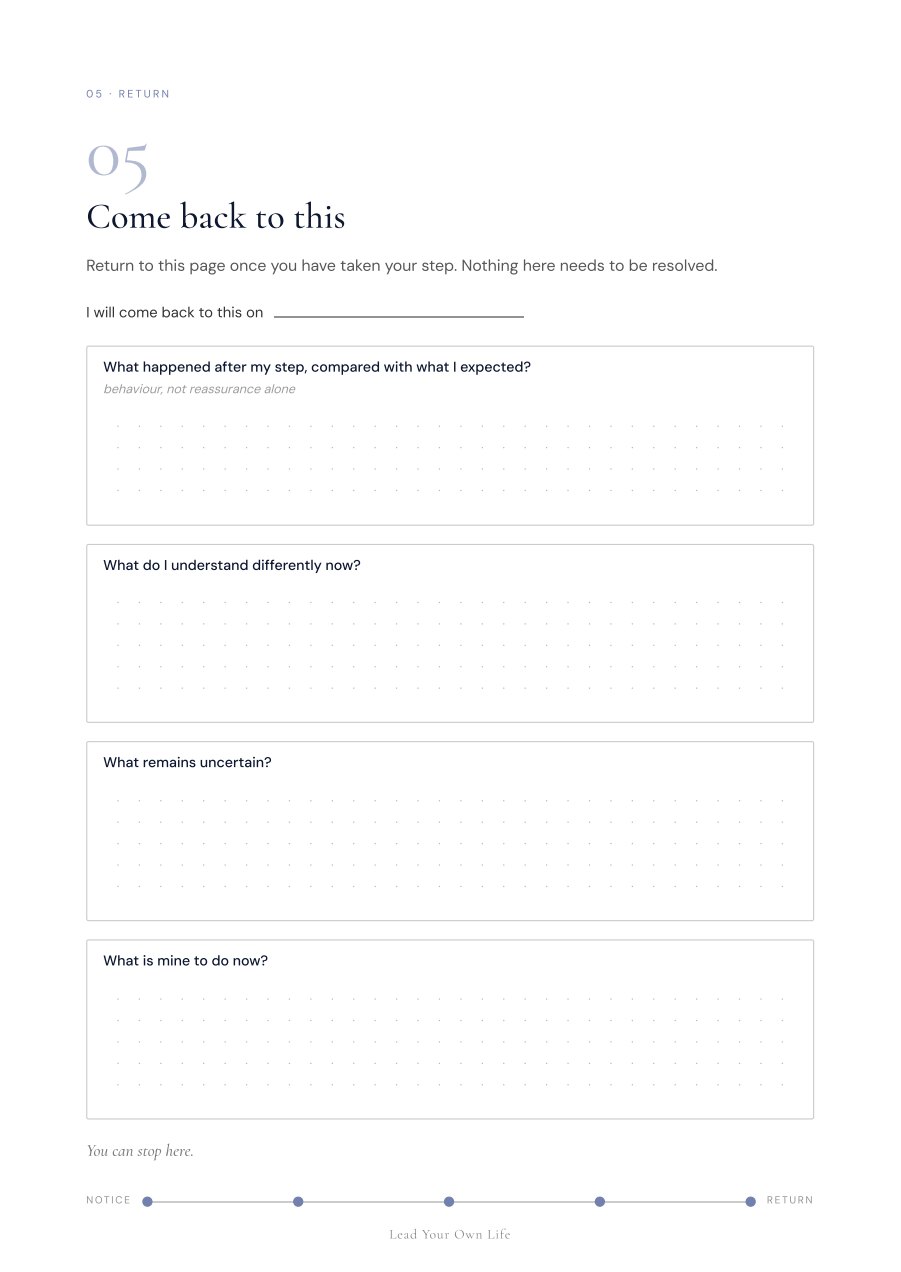
The three questions are in the video, from 4:03. The free guide Notice Your Inner Signal works through the same separation on paper, on one real moment.
What their distance can actually tell you
Someone can genuinely need space. Space that is genuinely needed tends to be communicated, and it does not leave one person alone with the work of chasing and repairing. That difference shows up in behaviour, and behaviour repeats, which is why a relationship is easier to read across several weeks than inside one silent evening.
Their distance can tell you how willing and how able they are to show up. That is the whole of what it knows about you, and no amount of waiting will make it know more.
So you were never only chasing them. You were chasing a verdict you wanted them to reverse, from someone who was never in a position to deliver one. And the question is no longer how to make them choose you. It is: if I were no longer afraid of their rejection, would I still choose this?